Kitty Hawk 1/48 Bell AH-1Z Viper

I have thoroughly enjoyed building Kitty Hawk’s 1/48 Bell AH-1Z Viper with Werner’s Wings resin gun turret. A full build article and lots of photos can be read here.
I have thoroughly enjoyed building Kitty Hawk’s 1/48 Bell AH-1Z Viper with Werner’s Wings resin gun turret. A full build article and lots of photos can be read here.

I’ve just finished Monogram’s 1/48 Cobra. There are plenty of photos and a fairly long description here.

An F4U-5 to complete my quartet of Hasegawa late-model corsairs. The article can be viewed here.

It turned into a bit of a disaster, but one I rather like. Here is Hasegawa’s Hellcat in post-war markings.

It’s the third late model Hasegawa 1/48 Corsair I’ve built, and I think that in these markings it looks fantastic.

It’s two-a-penny these days, but here’s my rendition of AMK’s gem.

My latest build, Academy’s 1/48 MiG-29 ‘Fulcrum-A’, with a whole load of aftermarket, is viewable here: Academy 1/48 Mikoyan MiG-29A ‘Fulcrum-A’

My latest build, Hasegawa’s 1/48 Bf109G-6 in Finnish markings, is viewable here: Hasegawa 1/48 Messerschmitt Bf109G-6.
This is a self-indulgent blog post. It’s really an extended diary entry for myself. From 2006-2013 I lived in Zhengzhou, central China, although a year and a half of that time was spent back in the UK having our two children. It was probably the happiest time of my life and we didn’t return to England out of choice. Zhengzhou is a very foreign place – a city of around 8 million people with less than 1000 non-Chinese when we were living there, and most of them were from other Asian countries. In many ways it feels like a dream – as if it didn’t happen that we invested so much time and energy into living there – and so this blog post is one way of recording the fact that it did happen and it wasn’t a dream.
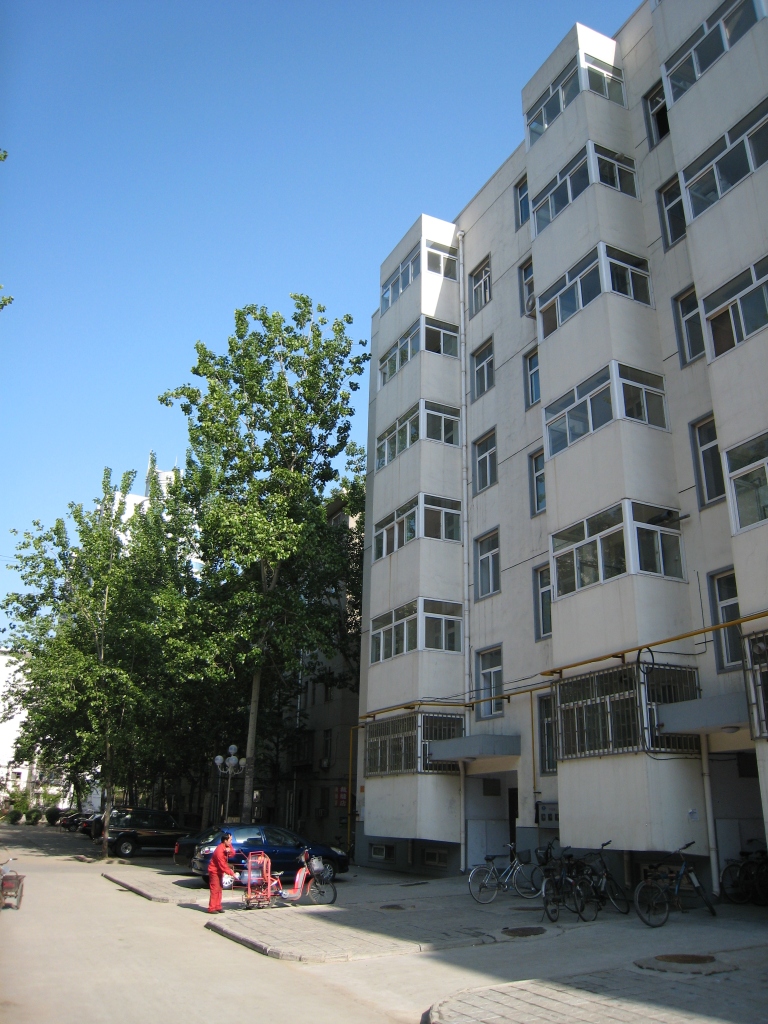
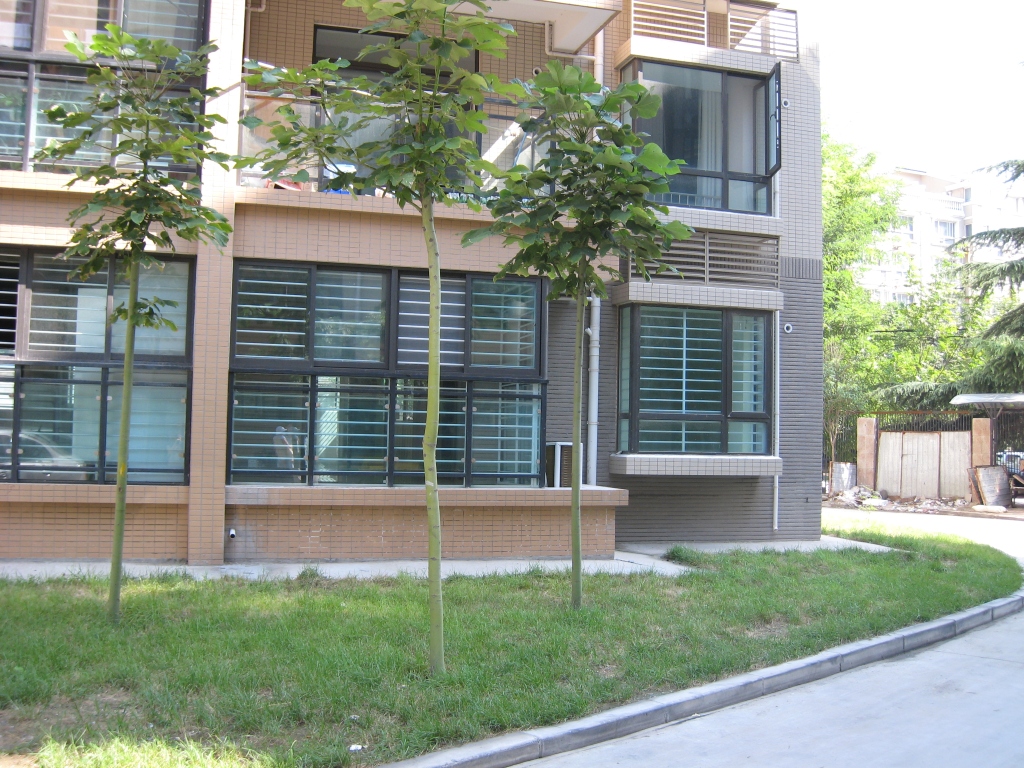


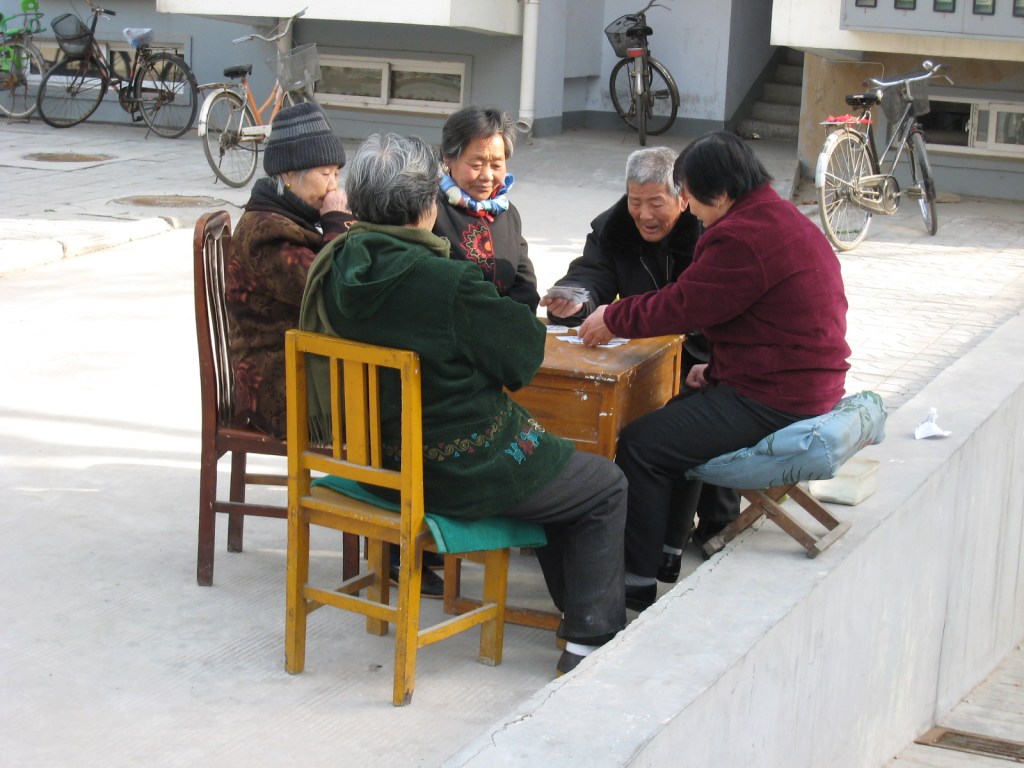


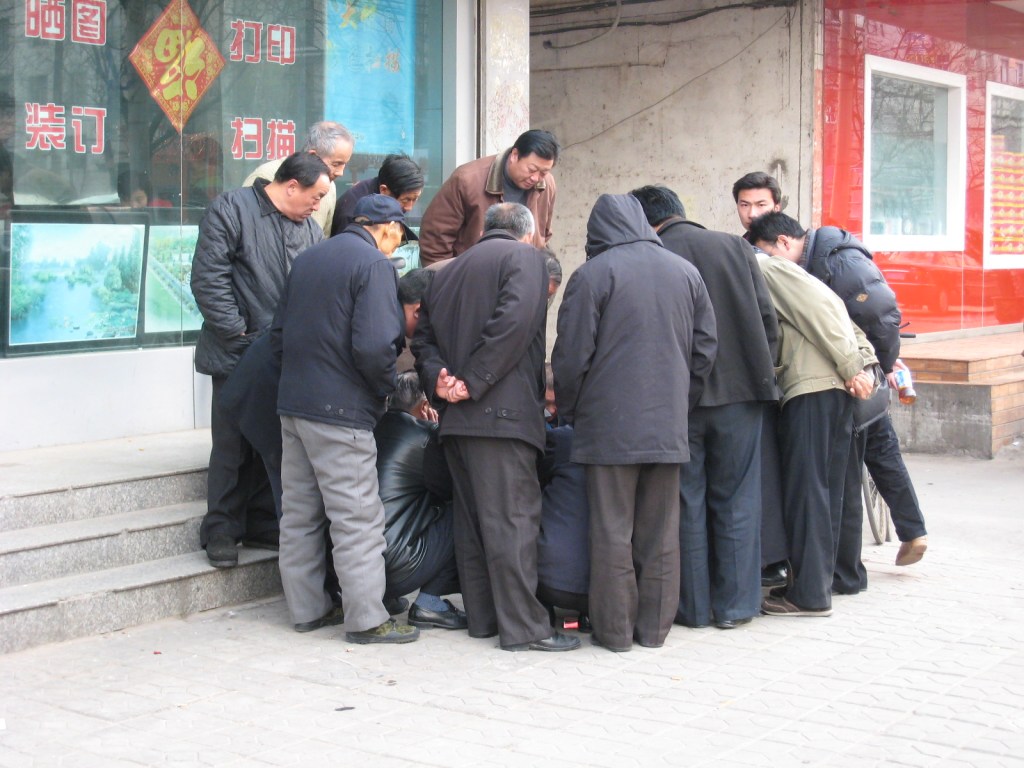

When I moved to China with my wife, I was expecting to have to give up modelling. Modelling had always been a big part of my life and I had a sizeable stash (which featured heavily in the wedding speeches) but I couldn’t see how I would be able to continue in China. I put all my stuff in storage back in my parents’ house and set off for the Far East with two suitcases and a lot of enthusiasm, committing to at least two years with a teaching contract I had.
It became apparent quite quickly after our arrival in August 2006 that we would need something to do in the evenings. We wouldn’t always be out and about meeting people. We delved into board games and DVDs, but I began to think about how I could model where we were.
I couldn’t find any model shops. There was the odd outlet selling the odd kit, usually an ancient Matchbox offering, or some poor-quality local brand I’d never heard of, but certainly nothing I’d want to buy and certainly no paints or materials. I eventually decided to take advantage of being not too far from Japan and ordered a ton of materials and paints from HLJ. This was surprisingly successful, and I received a large box containing Tamiya, Hasegawa and GS branded glues, sandpaper, paintbrushes, cutting mats, scribing templates, drill bits, knives, files, and so on. This was also my introduction to Mr Color paints. I’d used the Mr Hobby Colors extensively in the early 1990s in the UK when they were easily available from the Model Aerodrome in Guildford, but never the lacquers. This was to prove to be a fortuitous move; they are excellent paints.
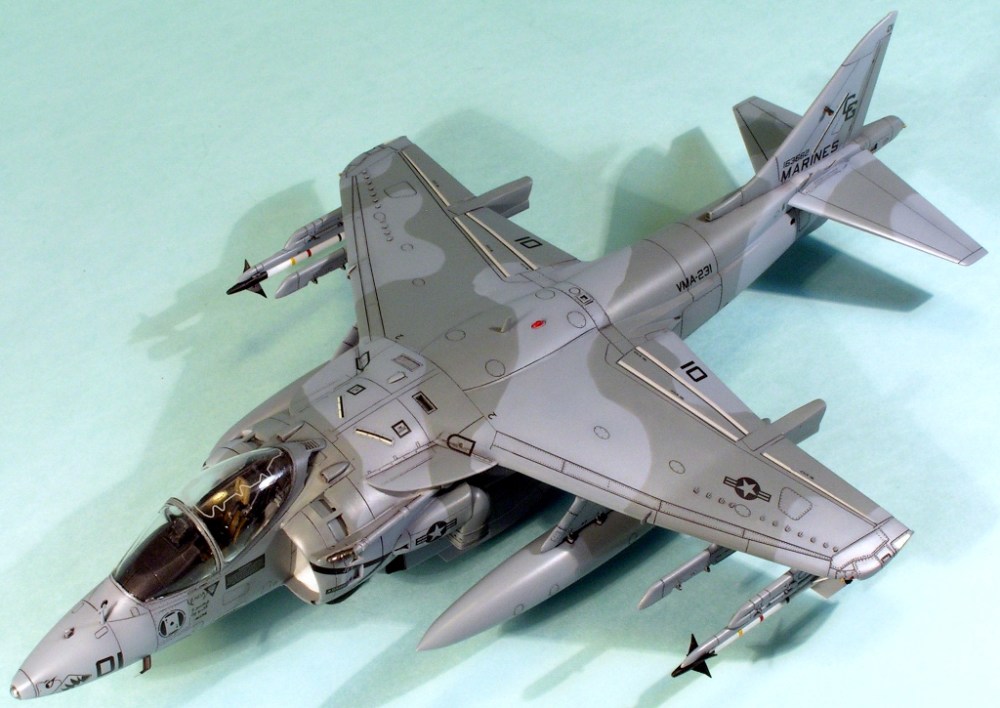
What I couldn’t get locally (or afford from Japan) was an airbrush. So I arranged for my sister to pull my Badger 200 out of storage in the UK and send it to me along with a bottle of Johnson’s Klear and two Hasegawa 1/48 AV-8Bs I had in my stash. Again, despite being really rather remote, this all arrived in good order. I still remember the thrill of going to the university post office to pick the package up. The modelling was on!
Except I lacked one thing: an air source. Shopping in China is not easy. Shops are *everywhere* and they are small. None of the friends I had made had any clue about this modelling malarkey and the questions I plied them with about where I might get stuff were simply met with blank stares.
So it was that one hot, grey, humid Saturday in October 2006 my wife and I set off on our bicycles to find a compressor. I was sure they must be available somewhere. Eventually, after cycling 5-6 miles I found one, and for £30 with a nice big tank and two wheels for easy movement; I was ecstatic. My wife was hot. Of course we couldn’t take this back with bikes. We locked them up and jumped on a local bus (7p a ride). Now, Chinese buses (at least back then) were agricultural beasts at best: very few seats and a ride like being in a small aeroplane in turbulence, so we were standing and being thrown around as usual. The journey was going well, until a particularly sharp bend and jolt sent the compressor crashing on to one of my wife’s exposed big toes. She stifled her scream to minimise the embarrassment (although, let’s face it, we were the only white people for miles around, so everyone was looking anyway) and went green. Fortunately we were close to home and stumbled off the bus. My wife sat on the pavement (which when you’ve seen what people do on the pavement and know how much of a clean-freak my wife is, will make you realise how much pain she was in) and I went in search of something cold to put on it. I ended up with a bag of milk from the fridge of a nearby shop (there’s always a shop nearby, and yes, milk is sold in bags in China. Only UHT though; no fresh milk available.) After some time she could walk again and she managed the six floors up to our apartment (as did I, which was not an easy feat with the heavy compressor). Modelling in China came at some cost to my wife, and I love her all the more for it: she lost the toe nail.
Modelling then commenced in a spare room in our huge and largely unfurnished apartment and the first two to roll off the bench in early 2007 were the Harriers:

Things continued happily on the modelling (and all other) fronts. My parents had very kindly offered to send me SAM, SAMI and Model Airplane magazines every month, and they were always awaited with intense anticipation. Our post always had to pass through the university’s Foreign Affairs Bureau, and the staff in there once enquired of my wife, “Why is Jon always so happy when that envelope [which contained the magazines] arrives every month?” I also found a Chinese modelling magazine, 模型世界 (mwoar-shing-shir-jie, or ‘Model World’), a nice glossy publication covering all genres. I couldn’t read Chinese at the time, but I liked looking at the photos. It was whilst looking at some of these I began to think, ‘I’ve seen these pictures before…’ Sure enough, flicking through the magazines I’d received from the UK, it became clear they were taking articles from English-language magazines and pirating them. I contacted a few editors who confirmed that these were being reproduced without permission. As we used to say, TIC! (This Is China.)
I remained active on the internet modelling forums and, sometime in mid-2007, became aware of an address for a model shop in Zhengzhou! With great excitement I printed the address out, ran down to the street, jumped into a taxi and said (in my poor Chinese), ‘I want to go here’ and pointed at the piece of paper in my hand. He drove off. We ended up on a street about 6 miles away on the other side of town. I’d never been that direction before and had no idea where I was. Unfortunately, Chinese addresses are hopeless. I am used to being in the UK where an address will get you somewhere; not so in China. We ended up on the right street, but there was no model shop in sight. Chinese people are extremely helpful and eventually the taxi driver had managed to gather a small crowd of locals around us to try and help out. I did have a phone number for the shop, but my Chinese was not good enough to attempt the call. Someone else called on my behalf and a few minutes later a little van turned up. I was told to jump in (so I did) and was promptly driven by the owner of this model shop to his fine establishment. Now that is service!
Of course, now I was obligated to buy something. The shop turned out to be a hodge-podge of RC and plastic models. Most were of no interest to me – the old Matchbox kits, plenty of tanks and shops – but there were some Japanese and Korean modern toolings. And even better, there was Mr Color! The only kit I found of interest was an Academy 1/48 CH-53, which at about £30 was quite cheap, but also 10% of my monthly salary. I bought it anyway 😉 It was a fair distance from my home, but I cycled fairly frequently back to this shop in the coming months to see what they had and increase my stock of Mr Color paints. It was from here I bought my first double-action airbrush, an unbranded example that cost about £30, and I never went back to the Badger again.
I kept modelling and built these in the remainder of 2007-8:

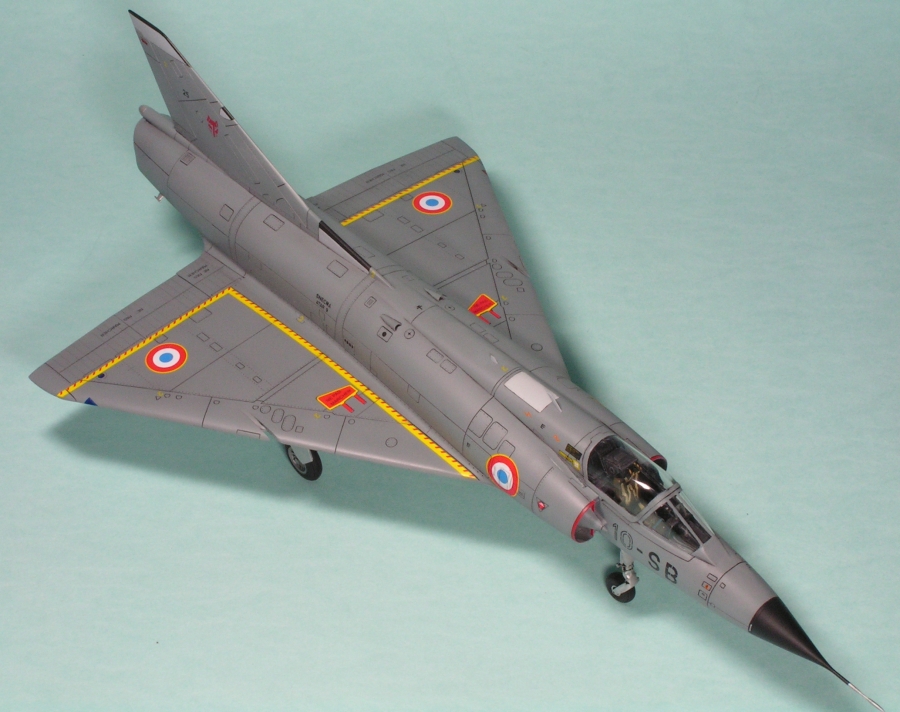

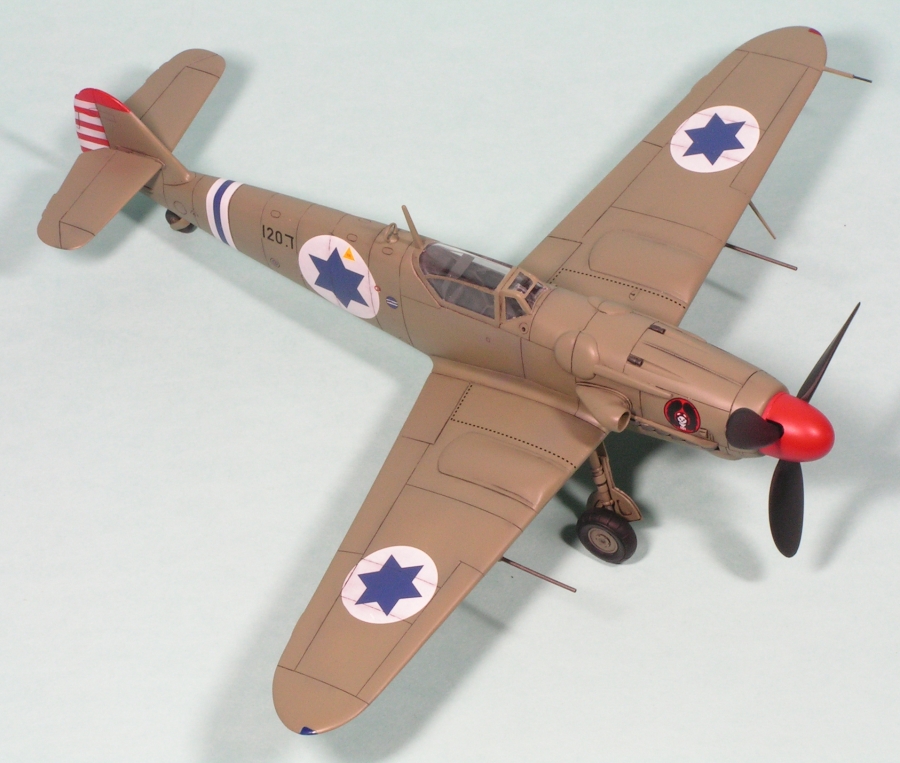


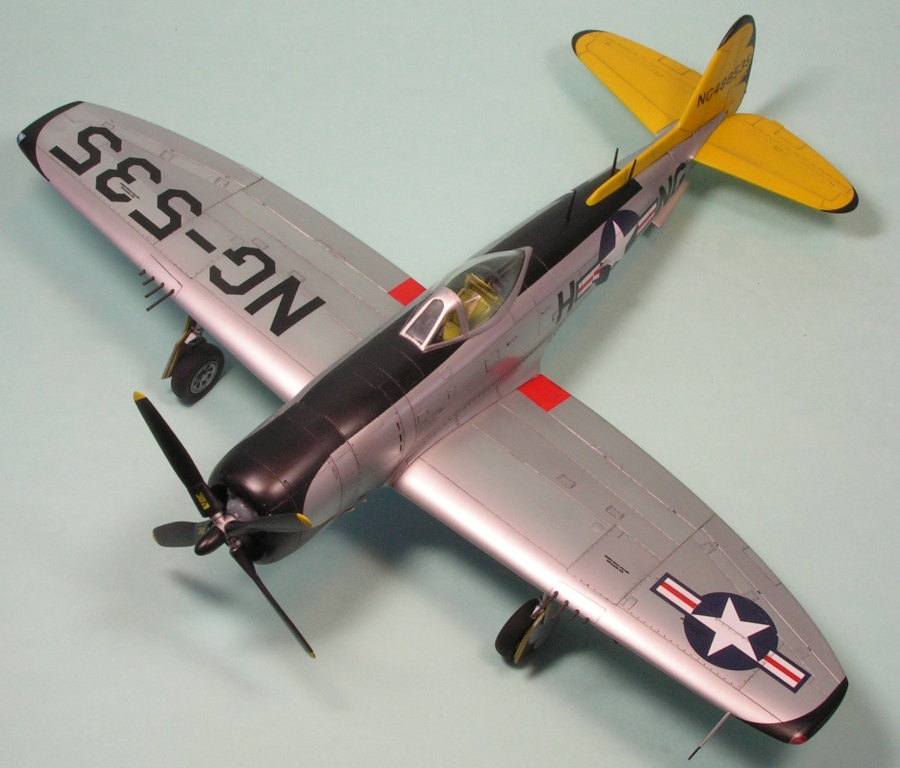
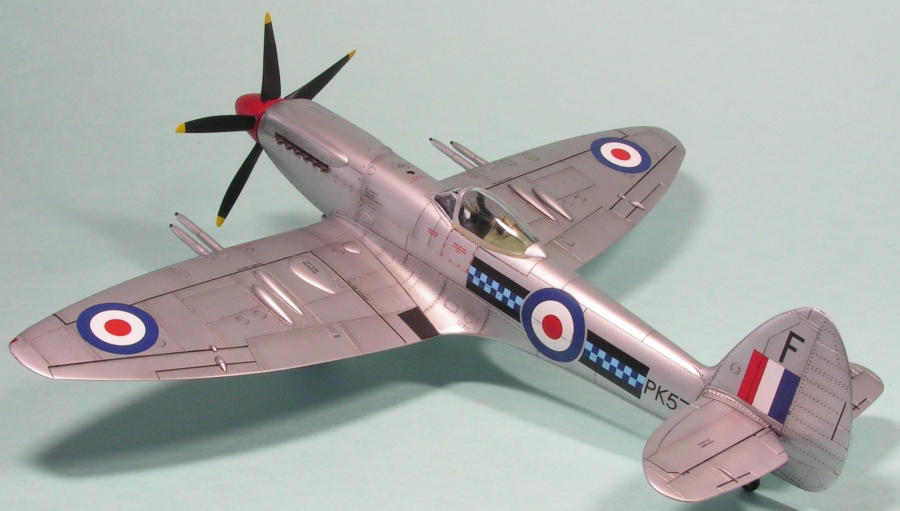

Some of these were kindly sent from my stash in the UK (the Buccaneer, the Mirages, the P-47N, the Buchon and the Avia), the P-47D was a mail order purchase from Lucky Model, and the Spitfire and P-40 were purchases from visits to Hong Kong – the best place I’ve ever found to buy models!
In 2008 I was flicking through Model World and found an address for another model shop in Zhengzhou. Another one! Could it be true? Again, I wrote the address out, ran outside and jumped in a taxi. Like last time, I was dumped somewhere I’d never been before, but unlike last time, there was no local help. I wandered these unpaved narrow streets surrounded by unpainted concrete cubes that passed as houses, thoroughly confused. No shops in sight at all, let alone a model shop. It all looked extremely unpromising. Eventually I gave up, left the narrow maze of streets for the main road and began to find a route home. It was whilst doing this I headed down a street, about half a mile away from where I had been, and came across the model shop! I was elated! It was even better than the other one, with recent releases from Hasegawa, Tamiya, Academy, Italeri and Trumpeter. And he had a complete rack of Mr Color paints! I left with Italeri’s reboxing of AMT’s 1/48 F7F Tigercat (which I had been looking for for some time) and Italeri’s 1/48 two-seater Gripen (which, in all honesty, is a pretty average kit I will never build). But the prices were amazing and I couldn’t resist.
And so began a relationship that lasted for the next five years. In 2009, after 12 months in the UK to have our first daughter, we returned to Zhengzhou and, coincidentally (honest!), ended up living 10 minutes walk from this model shop. I would walk there every week to ‘practice my Chinese’ (which, by now, I was studying full time), buy at minimum a pot of Mr Color (after all, it was only about 80p) and see what new items he had. I added many kits to the stash – the prices were too good – and would order stuff through him as well. I once remember being online at home and seeing the news that someone had, out of nowhere, produced a 1/48 Tu-2. I went straight round to the model shop and he had it for me within a couple of days. I remember reading about Kittyhawk’s first kit – the F-94C (an aircraft I had wanted kitted for sometime) – and went round to the model shop to find he’d just had a delivery of it. I loved going there. We never became friends – I was probably just too much of a weird foreigner – but we became acquaintances. I miss that shop.
My stash grew and grew. Sometimes from the shop I mentioned above, but also from buying kits from the USA when the pound was strong (and no VAT to worry about), Hong Kong and from Taobao. Taobao was (is) amazing. It’s basically the Chinese equivalent of Ebay, or Amazon Marketplace. Once I’d gone through the torture of setting up an account (which required a piece of electronic hardware from the bank), I was away. Hasegawa, Trumpeter and Hobby Boss kits would run 1/3 to 1/2 of the UK price, and delivery was cheap, quick and reliable. It was awesome.
Other kits were brought from home to whittle away the stash I held back there and keep to my general principle (back then) of building kits in the order in which they were bought. From 2009-2013 I built:
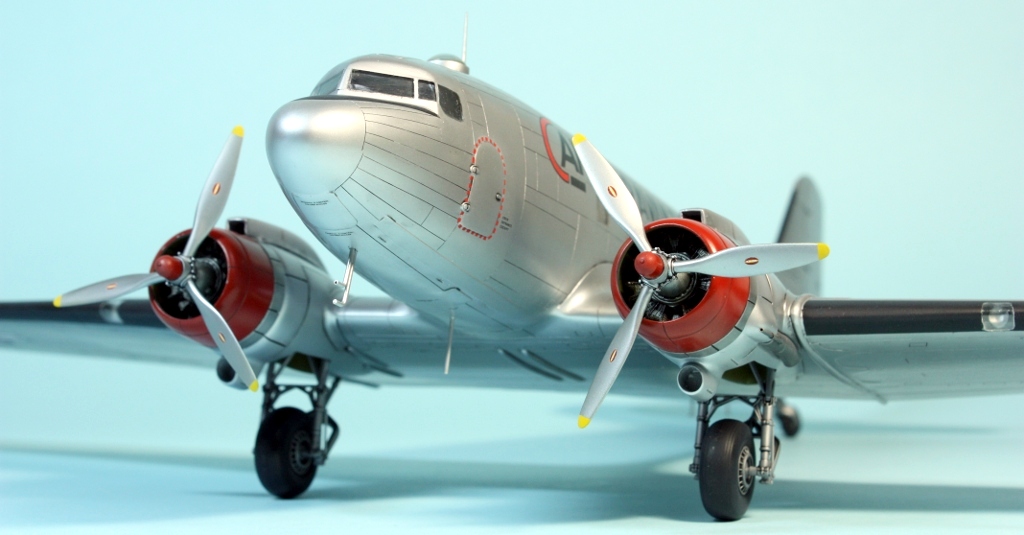

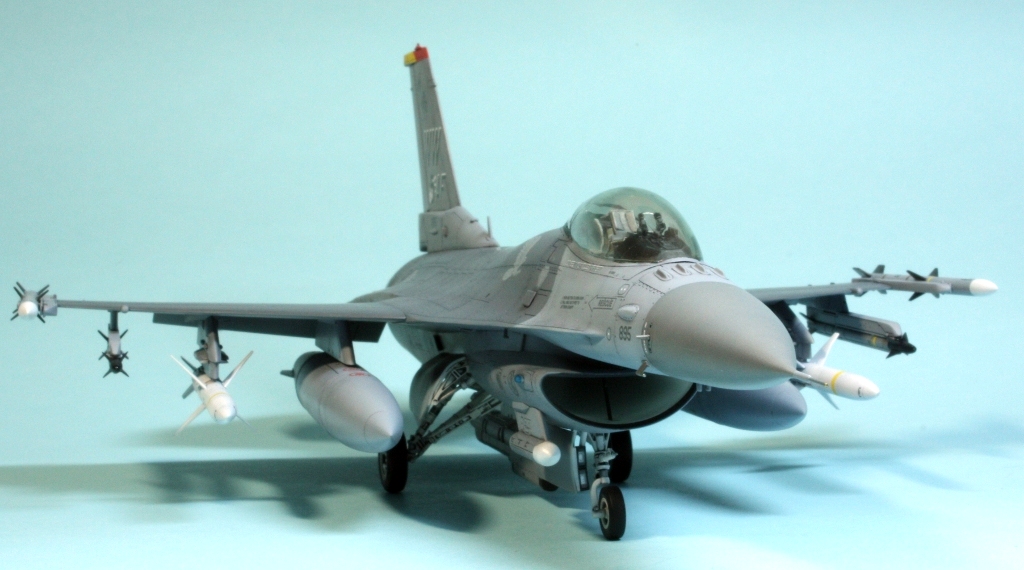
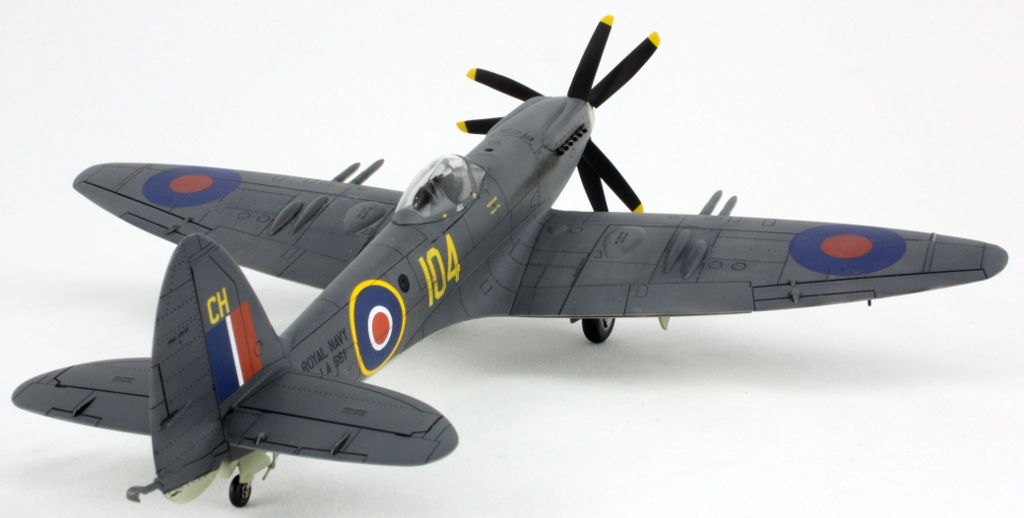


I was fortunate enough to have a small dedicated modelling room in our three-bedroom flat. In the summer that meant modelling in high-humidity 40+deg C heat (with no aircon in that room), and dust was an ever-present problem, especially when the sandstorms came through, but it was a modelling haven. Taobao also provided a cheap photographic set up, with some decent lamps, tripods and reflective umbrellas, so over time my photography began to improve.
Sadly, in June 2013 our China adventure came to an end. Modelling was only a small part of of our time there, but a surprising one. We’d arrived with two suitcases and no thought of me making models. We left with 11 large boxes being shipped home – models making up no small amount of that! – and all the models pictured above being carried back to the UK in hand luggage in dribs and drabs over the years. The journey home was usually pretty long: typically a taxi to an airport, a 90 minute flight to Shanghai (or 7 hour train journey), more taxi rides to stay overnight in a hotel, a 12 hour flight to the UK (sometimes via another country) and then the final journey home. All of them made it back absolutely fine and most are now in my display cabinet, except for the C-47. Sadly there was no way I could get that in hand luggage and I gave it to a friend of my eldest daughter. I expect it lasted 5 minutes once I had left!
There’s not much tangible I have left of our time in China. Our photos remain, like most people’s, largely unlooked at on the computer. My Chinese has dissolved away. The friends we made are now distant and we see them infrequently, if at all. But in the display cabinets in our living room are some models made during a very special time in our lives, and I am grateful for the memories they trigger. It wasn’t a dream. It was real.
Back to home.
I started building models when I was about 5, in the early 1980s, and continued to have an insatiable appetite to build more until…well it never went away. But I didn’t know anyone else who had any interest whatsoever, and thus it wasn’t until my teens that I discovered modelling magazines and I was in my mid-twenties when I actually met other people who stuck plastic together for a hobby. This isolation had a whole host of different influences on my model-building journey, two of which were 1) for 20 years I had no idea how to pronounce the word ‘decals’ since I’d never actually had to say it or had cause to hear it said (and truth be told, whenever I say it now I never know if ‘deh-calls’ or ‘dee-calls’ is what’s going to come out of my mouth), and 2) that my modelling skills evolved very sloooowly, since there was no provocation to change; I just did what the magazines said to do.
I think this is fairly true of many modellers. We get stuck in our ways and there are well-established routines. I’ve just been decalling Revell’s 1/48 Tornado with Xtradecals decals and recalled, again, how different the way I approach decalling is from the received wisdom passed down and around in magazines, internet forums, modelling clubs, and so on. The way I read it should be done, and followed for many years, was this:
1) Make sure your surface to be decalled is nice and glossy
2) Place decal in water
3) Wet place where decal is to go with a setting solution, like MicroSet or Mr Setter.
4) Put decal in place and remove excess water and setting agent with a cloth/cotton bud/etc. to ‘remove air’
5) Brush on some decal solvent over the top, like MicroSol or Mr Softer
Well I did this for donkeys years, and to be honest, never had great results. Then, by complete accident, I discovered a completely different way to get decals to do what I wanted them to do.
I was trying to apply some enormous IsraDecals decals – yellow and black ID triangles – to the wings of a 1/48 Eduard Mirage IIICJ. On the underside I tried the above method, using Mr Setter and Mr Softer, but the decals did not settle into the recessed detail very well. Then (and this was back in 2007 and so I can’t for the life of me remember why I did this) I decided to simply flood the wing with Mr Setter, float the decal onto this puddle, position the decal gently and then LEAVE IT. No removing excess water or Mr Setter; no tamping down with a cloth or cotton bud; just leave it floating in position. Several hours later I had the most stuck down, sucked down ID triangle possible. No silvering, no bubbles. No need to use a solvent. It was astonishing.

I didn’t change straight away, but this has now become the basic way I decal and I love it. My workflow now looks like this:
1) Get a good gloss finish (warning: Klear does not work very well for this; it sometimes reacts with the Mr Setter. I now use Tamiya X-22, but Gunze clear coats also work.)
2) Put puddle of Mr Setter where the decal is to go.
3) After soaking in water, remove decal from the backing paper with a brush loaded with Mr Setter.
4) Using brush, put the decal in place and LEAVE IT. The decal, if it’s biggish, will wrinkle horribly, but dry completely sucked down into the surface detail.


I’ve got this to work with IsraDecals, Microscale, Two Bobs, Hasegawa and a bunch of other decal manufacturers, but obviously I test it first each time. If some silvering does appear (rare), Mr Softer often works for me. The Mr Setter can leave a whitish residue but I find this disappears with a subsequent clear coat. On my more recent models you may see decals on vertical surfaces, like the tail or side of the nose, might silver a bit. I realised this was because the Mr Setter was running out from under the decal after I’d applied it; the decal must be horizontal as it sets.

So basically I’ve unlearned the way everyone else seems to do decals and by accident come up with my own method. But I can’t be the only one: What methods do you use that go against the flow?
More decals applied using this method (note that some of these are in-progress and *not* from the finished model):


 Jon's Models